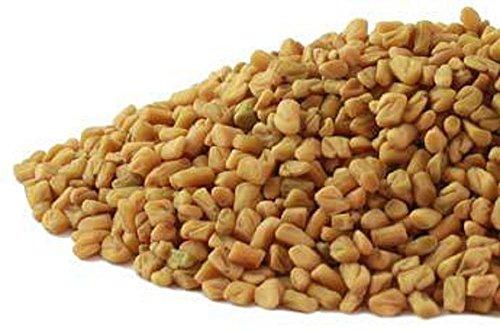
Description
- Botanical Name - Trigonella foenum-gra
- Other Names - Greek hay, Greek clover, alholva (Spanish), methi or medhika (Ayurveda), hu lu ba (Chinese), bird's foot
- Origin - India
- Typical Preparations - Dried, ripe seed either whole or powdered as a culinary spice, encapsulated or made into a tincture. Dried, ripe seed powdered made into a paste for use as a poultice.
- Equine Usages - Horses usually love the flavor. These hard little seeds function to strengthen the respiratory system, the mucus membranes, and the sinus in cases of upper respiratory infection, sinus issues, or congestion. Fenugreek also has strong properties of regulating and stimulating the lymphatic system. By helping to move lymph through the body, it can be helpful when treating anhydrosis (the puffs), or any condition where there is stuck lymph. Recommended Amount: 2 Tablespoons pe
Fenugreek is an annual herb native to the Mediterranean and Asia that produces highly aromatic seeds. The foliage and the seed of the plant are important agricultural crops and are featured in the cuisines of the region. In cooking, the bittersweet flavor of the seed improves with dry roasting or pan frying. Powdered fenugreek seed is usually blended with other spices and herbs to produce seasoning mixes for soups, sauces, stews and curries. Fenugreek seed is also used as a food additive and flavoring in processed foods, most notably in artificial maple syrup. The seed is also a source of natural diosgenin, which is used to manufacture synthetic estrogen.